
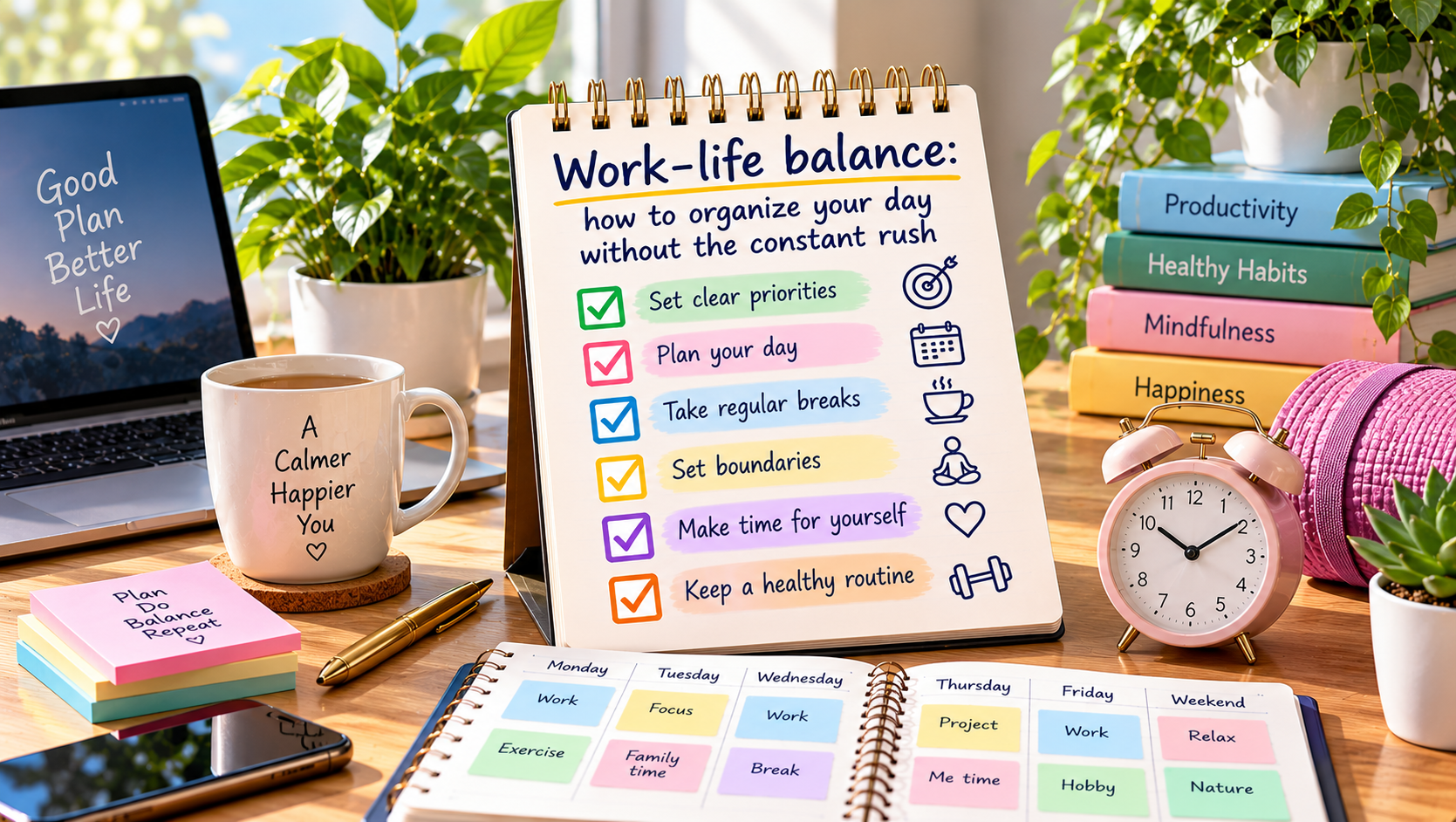
A persistent sense of urgency often develops gradually, rather than from one unusually demanding day. An overloaded schedule leaves little space between commitments, while unclear priorities make it difficult to decide what deserves attention first. Frequent interruptions can fragment focused work and create the impression that every task is taking longer than it should. Perfectionism may add further pressure when ordinary work is held to an unnecessarily high standard. Difficulty setting boundaries can also mean accepting new requests before considering the time and energy they require.
To understand your own patterns, observe a typical week before trying to change it. Notice when you feel most rushed, what is happening just beforehand, and which demands tend to compete for your attention. A brief note at the end of each day can reveal recurring triggers: back-to-back meetings, messages checked throughout the morning, last-minute requests, or personal responsibilities squeezed into small gaps. Consider which tasks genuinely require immediate action and which could be scheduled, delegated, or left until later. This observation is not a test of how efficiently you work; it is a way to see where pressure is coming from.
It is also useful to distinguish real deadlines from the habit of treating everything as urgent. A firm commitment with meaningful consequences may need prompt attention; an unread message or a task that simply feels uncomfortable may not. Pausing to check the actual deadline, impact, and next step can help prevent urgency from spreading across the whole day. The aim is not to fill every available minute with productivity or to remove every demand. Instead, create enough room for focused work, personal needs, and recovery. A day with some breathing space is more sustainable, and it can make genuine priorities easier to recognize and meet.
A useful daily plan begins with a brief review, either at the end of the previous workday or before work starts in the morning. Look at meetings, deadlines, and personal commitments, then choose a small number of priorities that would make the day feel worthwhile. Three important outcomes are often more manageable than a long list of tasks. Include responsibilities beyond work, such as a school pickup, an appointment, or time to prepare dinner. Seeing these commitments together makes it easier to make realistic choices and reduces the chance that personal needs will be treated as optional.
Estimate how long each task will actually take, including preparation, follow-up, and likely interruptions. If a report usually takes two hours, avoid scheduling it in a single one-hour block simply because the calendar has a gap. Place demanding or creative work during the hours when concentration is typically strongest, and reserve lower-focus periods for routine messages or administrative tasks. These estimates do not need to be exact; their purpose is to expose an overloaded schedule before it becomes a stressful day.
Build in transition time between meetings and tasks, as well as breaks and a proper meal. Leave some unassigned space for unexpected requests, delays, or work that takes longer than expected. Planning every minute can make a small disruption feel like a failure, while a modest buffer gives the day room to recover. At the end of the review, check that the schedule supports both professional goals and personal responsibilities. A short plan should provide direction, not impose a rigid script. When circumstances change, adjust priorities, move what can wait, and communicate early if a deadline or commitment needs to be reconsidered. This flexible routine can help create a more balanced day without requiring a complicated productivity system.
A calmer day often begins with fewer interruptions, not a longer to-do list. Group similar tasks, such as answering routine emails, making calls, or reviewing documents, into dedicated blocks. Switching repeatedly between unrelated activities can consume attention and make progress feel slower. Check messages at planned intervals rather than whenever an alert appears, and silence nonessential notifications while you work. Let colleagues know when you will next be available so they understand that a delayed reply is intentional, not neglectful.
Use focused work periods for tasks that require concentration, followed by deliberate breaks to rest, stretch, or get some water. Choose a realistic duration and adjust it to suit the work; the aim is sustained attention, not rigid adherence to a timer. When a new request arrives, assess its importance before agreeing. If it conflicts with existing priorities, explain what you are working on and ask which task should take precedence. Negotiate a workable deadline, or politely decline or defer requests that are less urgent. Clear, respectful communication helps protect your time while keeping expectations aligned.
Boundaries also depend on a clear stopping point. At the end of the workday, review what is complete, note the next steps for unfinished tasks, and set a time to return to them. For remote and hybrid workers, a small opening ritual—such as preparing a drink, checking the day’s priorities, or setting up a dedicated workspace—can mark the transition into work. An end-of-day ritual can signal that work is finished: close work applications, tidy the desk, and leave equipment in its place. When possible, keep work devices and messages out of personal time. These consistent cues make it easier to shift attention between responsibilities and recover outside working hours.
Reliable work-life balance is supported by ordinary habits repeated over time, not occasional bursts of effort. Adequate sleep can improve concentration and help make demanding days more manageable, while regular movement offers a practical way to release tension and maintain energy. Nourishing meals and enough time to eat also support steady performance better than relying on skipped lunches or last-minute snacks. These routines do not need to be elaborate: a consistent bedtime, a short walk, or preparing a simple meal can provide a useful starting point. The aim is to create habits that fit real responsibilities and can be maintained through busy periods.
Brief pauses during the day are valuable, too. A few minutes away from a screen, a stretch between meetings, or a quiet break before moving from work to home can help mark transitions and reduce the feeling of being continually on call. Protect time for family, friends, and personal interests in the same way you protect important work commitments. Rest is not a reward that must wait until every task is complete; an endless list makes that condition impossible to meet. Treating recovery as part of the schedule can support well-being and make it easier to return to work with attention and patience.
A weekly review can help turn good intentions into realistic plans. Notice when work regularly runs late, which tasks create bottlenecks, and whether your schedule matches your actual energy and responsibilities. Consider removing low-value commitments, delegating suitable tasks, or moving demanding work to a time when you are more alert. Then make a small adjustment for the coming week and observe whether it helps. Balance is not a perfectly optimized timetable that stays unchanged; it is an ongoing practice of responding to changing needs. Consistent, modest changes can gradually replace constant rush with greater control, while leaving room to revise routines when circumstances shift.
No responses yet